
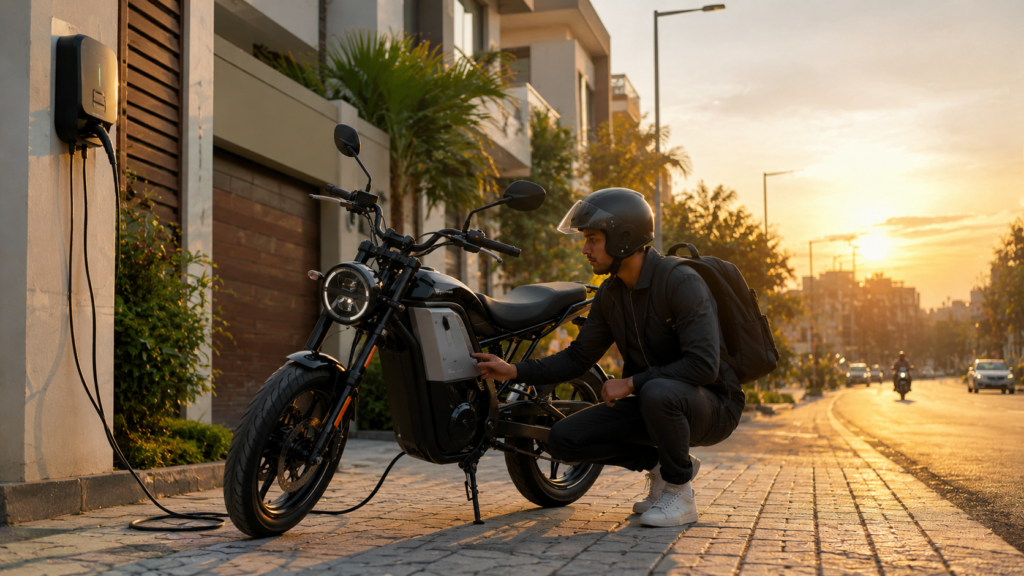
EV bikes in Pakistan
So you finally made the switch and bought yourself an EV bike. Good decision no more standing at the petrol pump watching the meter climb, no more oil changes, no more spark plug replacements. But here’s something a lot of new owners don’t realize: EV bikes in Pakistan aren’t “zero maintenance,” they’re just “different maintenance.” And if you treat them exactly like you treated your old petrol bike, you’ll shorten their lifespan without even realizing it.
This guide walks you through exactly what EV bikes in Pakistan actually need battery care, seasonal handling, and the small daily habits that make the real difference between a battery that lasts three years and one that dies in eight months.
Why EV Bike Maintenance Is a Completely Different Game
Petrol bike maintenance revolves around the engine oil changes, spark plugs, air filters, carburetor tuning. EV bikes skip all of that entirely, since there’s no combustion engine to service. Instead, everything revolves around three things: the battery, the motor, and the electronics.
This is genuinely good news in terms of cost and effort electric bikes in Pakistan need far fewer mechanic visits than petrol bikes. But the flip side is that the one component that does need attention, the battery, is also the most expensive part of the entire bike. A lithium battery replacement in Pakistan typically costs anywhere from Rs. 50,000 to Rs. 200,000 depending on capacity and specs, which is exactly why battery care deserves more attention than most new owners give it.
The Golden Rule of Battery Charging
If there’s one habit that determines how long your EV bike’s battery survives, it’s how you charge it. Most owners either overcharge out of convenience or let the battery drain too low before plugging in both are damaging over time.
Here’s what actually protects battery health:
Avoid letting the battery drop below 20-30% regularly
- Deep discharges stress lithium cells and speed up degradation.
Don’t leave it charging at 100% for hours after it’s full
- Unplug once it hits full charge rather than leaving it on the charger overnight out of habit.
Charge overnight for convenience, but check timing if possible
- Most EV bikes take 5-8 hours for a full charge, so overnight charging works well as long as you’re not leaving it plugged in for 12+ hours regularly.
Always use the manufacturer’s original charger
- Third-party or generic chargers are one of the most common causes of premature battery damage the voltage and current output often don’t match what your specific battery needs.
Pakistan’s Climate Is Genuinely Hard on EV Batteries
This is the part most owners underestimate. Pakistan’s weather swings are rough on lithium batteries in ways that milder climates simply don’t experience.
You don’t need to be mechanically inclined to keep an EV bike in good shape. For reference, brands like MetroEV publish their own detailed maintenance checklist, and most of what matters boils down to a few quick and simple habits:
Summer heat: is the bigger threat of the two for EV bikes in Pakistan. Cities like Karachi regularly hit 45°C in summer, and heat is one of the fastest ways to degrade a lithium battery’s lifespan. Direct sunlight while charging or parking makes this worse, since the battery heats up further from both the charging process and the ambient temperature.
Winter cold: especially in places like Islamabad where temperatures can drop below 5°C, reduces battery performance temporarily you’ll notice reduced range and slower acceleration until the battery warms up during use.
Practical steps for both extremes:
- Park in shade during summer, never in direct sunlight for extended periods a simple habit that protects EV bikes in Pakistan from unnecessary heat damage.
- Avoid charging immediately after a hot ride, let the battery cool down first.
- In winter, store the bike indoors when possible rather than leaving it out overnight, since EV bikes in Pakistan lose noticeable range in colder temperatures.
- If storing the bike for an extended period (say, during a trip), keep the battery at roughly 50-60% charge rather than fully charged or fully drained
Monsoon Season Needs Its Own Checklist
Water and electronics don’t mix, and EV bikes have a lot more exposed electronics than a petrol bike does. During monsoon season:
- Avoid riding through deep puddles or standing water this is the single biggest monsoon risk for EV bikes
- Dry the bike thoroughly after any wet ride, especially around the battery compartment and connectors
- Never wash the bike with a direct high-pressure water spray near the battery housing
- Check for water residue or unusual dampness around wiring after any heavy rain exposure
Monthly and Weekly Maintenance Checklist
You don’t need to be mechanically inclined to keep an EV bike in good shape. Most of what matters is quick and simple:
Before every ride (takes under a minute):
- Check tyre pressure underinflated tyres reduce range and strain the motor
- Test headlight, taillight, and indicators
- Quick brake check
Monthly:
- Inspect battery casing for cracks, swelling, or unusual warmth any of these are red flags worth taking to a technician immediately.
- Check battery connection points for corrosion or looseness, especially important for EV bikes in Pakistan given dusty road conditions.
- Clean dust and debris from the motor housing and vents, especially if you ride in dusty areas regularly.
- Tighten any bolts or fittings that may have loosened from regular road vibration.
As needed:
- Lubricate the chain if your model uses one
- Replace tyres when tread wears down, since worn tyres affect both safety and range
What EV Bikes Don’t Need (And Why That’s a Relief)
Just to be clear on the upside here’s what you can cross off your maintenance list compared to a petrol bike:
- No engine oil or oil filter changes
- No spark plug replacement
- No carburetor cleaning or fuel filter checks
- No clutch adjustment (on models without a manual clutch)
- Far less frequent mechanic visits overall
This is a big part of why EV bikes in Pakistan appeal to budget-conscious riders lower running costs aren’t just about electricity versus petrol, they’re also about avoiding the constant small repair bills that come with a combustion engine.
When to See a Professional vs. When You Can DIY
| Issue | DIY or Professional? |
|---|---|
| Low tyre pressure | ✅ DIY — Pump up yourself. |
| Battery not charging at all | 🔧 Professional — Could be a charger or battery fault. |
| Sudden loss of power while riding | 🔧 Professional — Check motor connections first. |
| Dim headlight | ✅ DIY — Check it first. If it stays dim after charging, get it inspected. |
| Battery casing swelling or overheating | 🚨 Professional Immediately — Safety issue. Stop using the bike. |
| Chain needs lubrication | ✅ DIY |
| Unusual motor noise | 🔧 Professional |
Frequently Ask Question’s
1. How often should I service my EV bike in Pakistan?
Most EV bikes in Pakistan need a professional check-up every couple of months, though this depends heavily on how much you ride. Daily commuters should lean toward more frequent checks than occasional riders.
2. Can I use any charger with my EV bike?
No always use the manufacturer’s original or approved charger. Generic third-party chargers are one of the leading causes of early battery damage.
3. How long does an EV bike battery actually last in Pakistan?
With proper care, most lithium batteries last several years, though Pakistan’s heat can shorten this if charging and storage habits aren’t managed carefully.
4. Is it bad to charge my EV bike every single night?
Not inherently, as long as you’re not leaving it on the charger for excessively long periods after it’s full. Nightly charging is actually a common and practical routine for most commuters.
5. What's the biggest maintenance mistake new EV bike owners make in Pakistan?
Ignoring heat exposure. Parking in direct sun and charging immediately after a hot ride are two of the most common ways owners unknowingly shorten their battery’s lifespan.
Conclusion
Owning EV bikes in Pakistan really does mean fewer trips to the mechanic and lower running costs overall but that convenience only holds up if you treat the battery with the care it actually needs. A little attention to charging habits, heat exposure, and monsoon precautions goes a long way toward getting the full lifespan out of your investment, rather than facing an expensive battery replacement years earlier than you should have to.
Treat the battery like the most valuable part of your bike, because financially, it is.