
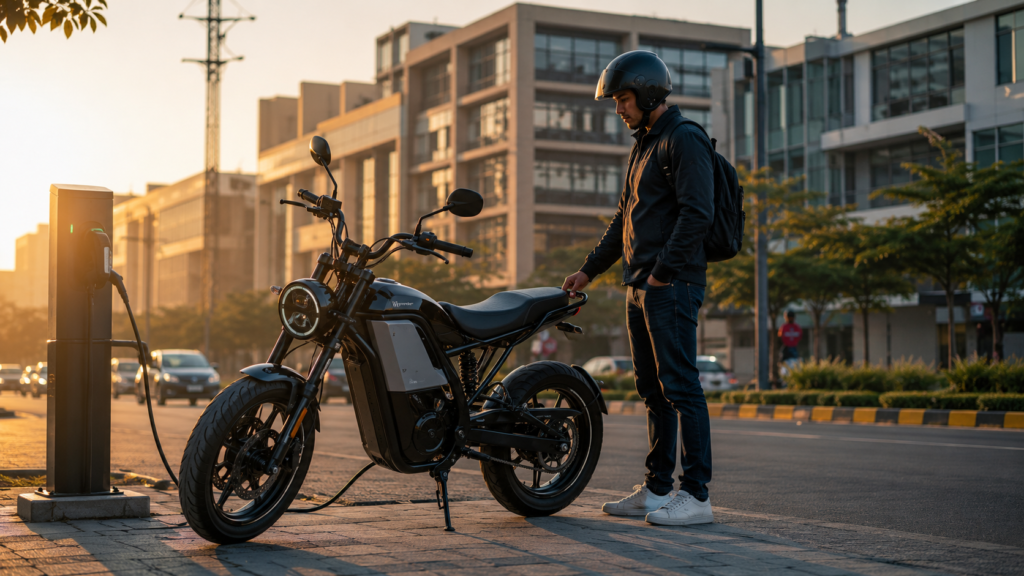
Every time petrol prices go up and let’s be honest, they’ve been going up a lot lately a new wave of Pakistani riders starts googling “electric bikes in Pakistan.” It makes sense. Watching your fuel budget disappear week after week gets old fast, and electric bikes in Pakistan have quietly gone from a niche experiment to a genuinely practical option on our roads.
But is switching actually worth it, or is it just hype? In this guide, we’ll walk through real prices, real running costs, the brands actually worth considering, and the honest downsides nobody puts in their marketing brochures so you can decide for yourself whether an electric bike fits your life.
Best bikes in Pakistan
Why So Many Pakistanis Are Suddenly Considering Electric Bikes
The math behind this shift isn’t complicated. With petrol prices sitting well above Rs. 320 per litre, a typical daily rider burns through Rs. 6,000-8,000 a month just on fuel, before even counting oil changes and routine servicing. Charging an electric bike, by comparison, usually costs somewhere between Rs. 1,000 and Rs. 2,000 a month for similar daily us which works out to real monthly savings for anyone commuting regularly.
On top of the fuel savings, the government’s 2026 electric vehicle policy has made switching even more attractive. Buyers can now get a rebate of up to Rs. 50,000 at the point of purchase, along with a full waiver on registration fees and annual token tax for electric scooters and bikes. That’s a meaningful chunk knocked off the total cost of ownership, especially for middle-class buyers who were previously priced out.
What Electric Bikes Actually Cost in Pakistan Right Now
Prices of electric bikes in Pakistan vary quite a bit depending on the brand, battery type, and range, so here’s a realistic breakdown by category:
Budget entry-level models:
Roughly Rs. 90,000 to Rs. 140,000 these are your basic short-range city commuters, good for students and short daily trips.
Mid-range models:
Roughly Rs. 150,000 to Rs. 250,000 better range, sturdier build, and usually a stronger warranty.
Premium models:
Rs. 250,000 and up longer range, faster charging, and more powerful motors aimed at serious daily commuters or slightly longer routes.
For context, the YJ Future Indus currently sits around Rs. 90,000, making it one of the most affordable entry points into electric bikes in Pakistan, while a stronger option like the YJ Future Cruise Z9 with a 1500W motor and a range of 90-110 km per charge comes in around Rs. 229,000. Yadea’s lineup sits in a similar mid-range bracket, with the Yadea M3 priced around Rs. 169,000 offering roughly 80 km per charge.
Battery Type: The One Spec You Shouldn’t Ignore
Here’s something a lot of first-time buyers of electric bikes in Pakistan overlook, and it genuinely matters given the local climate: not all batteries are created equal.
- Lead-acid batteries are cheaper upfront but degrade quickly, especially once temperatures cross 35°C which, let’s face it, is most of the year in a lot of Pakistan. They typically last only 300-400 charge cycles before performance drops noticeably.
- Lithium-ion and LiFePO₄ (LFP) batteries cost more initially but last significantly longer, often rated for 2,000+ charge cycles, and handle heat far better.
If you’re buying an electric bike as a long-term investment rather than a short-term experiment, spending a bit more for a lithium or LFP battery will save you money and frustration down the road. A cheap lead-acid battery that needs replacing within a year isn’t actually cheap.
Range and Charging: What to Realistically Expect
Most electric bikes in Pakistan today offer somewhere between 50 and 110 km on a full charge, depending on the model and battery type. Low-speed models typically top out around 25-40 km/h, while higher-speed models can reach 60-80 km/h plenty for city riding, though not something you’d want for highway use.
Charging times generally fall in the 5-6 hour range using a standard home socket, which makes overnight charging the most practical routine for daily commuters. If your daily round trip is under 40-50 km, most mid-range electric bikes will comfortably cover your needs without range anxiety.
Top Electric Bike Brands Worth Considering
The market for electric bikes in Pakistan has genuinely matured over the past year or two, with several brands now offering real after-sales support instead of just a one-time sale.
- YJ Future known for affordability and a wide model range, from the budget-friendly Indus to more powerful options like the Cruise Z9. Popular with students and daily commuters.
- Yadea a globally established brand with a strong dealer network in Pakistan, focused on reliability and predictable running costs.
- Jolta, Metro, OKLA, and Evee all offer competitive local lineups with varying focus areas, from budget scooters to higher-range commuter models. Worth comparing based on your city’s dealer and service availability.
- Horwin sits at the premium end, offering a more powerful motor and a design closer to a proper motorcycle rather than a scooter, aimed at riders who want performance alongside efficiency.
Petrol vs Electric: Quick Comparison
| Factor | Petrol Bike | Electric Bike |
|---|---|---|
| Monthly running cost | Rs. 6,000–8,000+ | Rs. 1,000–2,000 |
| Registration/token tax (2026) | Applicable | Waived under EV policy |
| Maintenance | Regular oil changes, engine servicing | Minimal — battery care, tire checks |
| Range per fill/charge | 300+ km | 50–110 km typically |
| Refuel/charge time | Minutes | 5–6 hours (home charging) |
| Best for | Long trips, highway riding | Short-to-medium daily city commutes |
Who Should Actually Buy an Electric Bike Right Now
Electric bikes in Pakistan aren’t the right fit for everyone yet, and that’s worth saying honestly rather than oversell it.
Good fit if you’re:
- A student or office worker with a predictable daily commute under 40-50 km
- Someone who can charge overnight at home reliably
- Looking to cut monthly fuel spending significantly
- Buying primarily for city riding, not highway trips
Maybe wait if you’re:
- Doing frequent long-distance or highway rides
- Living somewhere without reliable home charging access
- Needing a bike for someone else’s use across unpredictable routes
Practical Buying Tips
- Always prioritize battery type over price. A cheaper lead-acid model will cost you more in replacements within a year or two.
- Check local service network before buying. A great bike is useless if nobody in your city can service the battery or motor.
- Ask about installment options. Several banks and dealers now offer easy installment plans for electric bikes, which can make a mid-range model more accessible upfront.
- Confirm PAVE scheme eligibility before purchase, since the rebate and tax waivers can meaningfully lower your total cost don’t assume every model automatically qualifies.
- Test the charging routine before committing. Make sure your home setup can realistically support daily overnight charging without hassle.
FAQs
1. Are electric bikes actually cheaper to run than petrol bikes in Pakistan?
Yes, significantly. Most riders save around 70% on monthly running costs when switching from petrol to electric, mainly due to the difference between fuel and charging costs.
2. How long does it take to charge an electric bike at home?
Most models take approximately 5 to 6 hours for a full charge using a standard home socket, making overnight charging the most practical option.
3. What's the most affordable electric bike in Pakistan right now?
Entry-level models like the YJ Future Indus start around Rs. 90,000, making them accessible for students and budget-conscious commuters.
4. Do electric bikes need registration in Pakistan?
Under the 2026 EV policy, registration fees and annual token tax are waived for electric scooters and bikes, though it’s worth confirming current requirements with your local excise office.
5. Which battery type should I choose for an electric bike?
Lithium-ion or LiFePO₄ (LFP) batteries are the better long-term choice, especially in Pakistan’s climate, since they last far longer and handle heat much better than lead-acid batteries.
6. Can electric bikes handle long-distance or highway riding?
Not really most models are designed for city commuting with a range of 50-110 km per charge, so they’re better suited to daily short-to-medium trips than highway touring.
Conclusion
Electric bikes in Pakistan have moved well past the “interesting experiment” phase and into genuinely practical territory for the right kind of rider and that shift is only likely to continue as more brands and better batteries enter the market. If your daily commute is short, predictable, and mostly within the city, the fuel savings and reduced maintenance make a real difference to your monthly budget especially with the 2026 policy incentives sweetening the deal further.
If your riding involves long, unpredictable routes or highway stretches, a petrol bike still makes more sense for now. Either way, test ride before you buy, and don’t skimp on battery quality just to save a few thousand rupees upfront decision will follow you for the next two years.
Comments are closed.